whispers in the corridors










IIT Ropar organizes AI Awareness Programme (UPDATED)
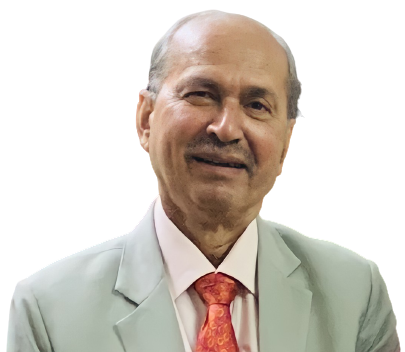
 The School of Artificial Intelligence and Data Engineering (sAIDE) at the Indian Institute of Technology Ropar organized an Artificial Intelligence Awareness Programme for the Next Generation of Engineers on January 19, 2026 at IIT Ropar. The programme was held as part of the Pre-IndiaAI Impact Summit activities, in alignment with the IndiaAI Impact Summit announced by Narendra Modi, Prime Minister of India. The programme was inaugurated by the Prof. Rajeev Ahuja, Director, IIT Ropar, who emphasized the growing importance of Artificial Intelligence as a foundational engineering discipline. He highlighted the role of academic institutions in developing ethical and application-driven AI solutions and encouraged students to apply AI technologies to solve real-world problems. Prof. Ahuja emphasized that young people are the future of India, and noted that the responsibility of shaping the nation’s AI-driven growth lies with the current generation of students and researchers. The programme witnessed participation from around 150 attendees, including postgraduate engineering students and faculty members from IIT Ropar and nearby institutions. Prof. Ahuja also underscored the need for the responsible use of Artificial Intelligence. He cautioned students against the misuse of AI tools, particularly for writing research papers and academic submissions, stating that such practices compromise academic integrity and research ethics. He urged students to use AI as a supportive tool for learning and innovation, rather than as a substitute for original thinking and scientific rigor. The IndiaAI Impact Summit is envisioned as one of the largest AI initiatives in the Global South, with a focus on developing responsible, inclusive, and scalable Artificial Intelligence for societal benefit. The event at IIT Ropar aimed to create awareness among postgraduate engineering students about emerging trends, research directions, and career opportunities in Artificial Intelligence. Dr. Santosh Kumar Vipparthi, Head of the School of Artificial Intelligence and Data Engineering, IIT Ropar, delivered an address on the vision of the school of Artificial Intelligence and Data Engineering (sAIDE) and the research opportunities available at the institute. He discussed the interdisciplinary nature of AI research at IIT Ropar, covering areas such as healthcare, agriculture, computer vision, autonomous systems, and data-driven decision making. A Special Address was delivered by Dr. Pushpendra Pal Singh, Project Director, Annam.AI and Dean (CAPS), IIT Ropar. He spoke on the role of Artificial Intelligence in agriculture and societal development, and explained how AI-based solutions can address large-scale challenges related to food security and sustainability. Dr. Singh introduced Annam.AI, an AI Centre of Excellence in Agriculture at IIT Ropar, and described its ongoing activities. He stated that the centre is working on AI-based crop identification, pest identification, yield estimation, and decision support systems for farmers. He also noted that IIT Ropar is actively engaged in AI research related to agriculture, using machine learning and computer vision techniques to support precision farming and sustainable agricultural practices. The inaugural session began with a Welcome Address by Dr. Abhinav Kumar, Assistant Professor, SAIDE, IIT Ropar, who outlined the objectives of the programme and highlighted its relevance in the context of the Pre-India AI Impact Summit. The inaugural session concluded with a Vote of Thanks by Dr. Vandana Bharti, Assistant Professor, SAIDE, IIT Ropar, who expressed sincere gratitude to the Director, Prof. Rajeev Ahuja, for his visionary leadership and inspiring address. She also thanked Dr. Pushpendra Pal Singh for sharing insights on leveraging Artificial Intelligence for societal impact, and Dr. Santosh Kumar Vipparthi for highlighting academic and research opportunities at IIT Ropar.
The technical sessions included expert talks by IIT Ropar faculty members on topics such as multimodal emotion analysis, secure healthcare systems, domain adaptation for computer vision, and generative AI for engineers. Participants also visited the Computer Vision and Pattern Recognition Lab, AR and VR Lab at Awadh, and the Centre for Drone and Autonomous Systems, gaining exposure to ongoing research and infrastructure.
The programme concluded with an interactive panel discussion involving faculty members of the School of Artificial Intelligence and Data Engineering, where students engaged in discussions on research pathways, interdisciplinary collaboration, and career prospects in Artificial Intelligence.
Send Feedback
More Bureaucracy News
- Bharat Steel to shape global dialogue on the future of steel (UPDATED)
- Post of Vishal Gupta upgraded to Director level (UPDATED)
- Hanumaiah Korukonda appointed as Deputy CGA, O/o CGA (UPDATED)
- A K Mishra appointed as Ambassador to Georgia (UPDATED)
- Appointments of three IRS-IT officers (UPDATED)
- Deepak Jain promoted as ED in PFC (UPDATED)
- Appointments of four EDs in ONGC (UPDATED)
- Esha Sengupta appointed as MD, WBTDCC in W Bengal (UPDATED)
- Ms Rashmi Diwakar posted as Chairman, RRB, Bhopal
- Pankaj Jaiswal posted as Chairman, RRB, Gorakhpur
- Last date to receive applications for 21st PoEEB meeting extended
- Last date to apply for Jt CEO, National Authority, CAMPA
- RMRCL advertises Director (Project)
- MRVCL seeks DGM-General
- DFCCIL advertises DGM/JGM (OP&BD) for various locations
- Interviews for Sr Vet Officer posts in Dte of Animal Husbandry & Vet Services, A&N admin soon
- DFCCIL seeks Sr Manager, Asstt Manager& Jr Manager-Vig (Gen Admin) (Misc/OP&BD)
- RVNL seeks DGM –Finance, Kolkata
- Haokip joins as Probationer
- IRS officer appointed Director, NCPCR
- IP&TAFS officer appointed Member, Finance, Prasar Bharti
- 4 ITS officers transferred
- Navy to Recruit 260 SSC Officers
- Interviews for Director (Fin), IRCTC on January 21
- Rajesh Kumar Chandel selected as Director (Proj), SJVN Ltd
- Four IPS officers in SVPNPA promoted to Deputy Director rank
- Sreejith promoted as DIG, NIA
- R S Chhabbi appointed as DIG, CRPF
- Saiawi appointed as High Commissioner to New Zealand
- Singhal to join ED as Dy Director
- MEA Scores Strategic Win With India–UAE Defence Pact, bursts Pakistan's Islamic NATO bubble!
- Karnataka DGP suspended
- Bhushan Gagrani to continue as Commissioner of BMC
- Workday blues melt away with Md Rafi’s melodies: IAS Rahul Mahiwal
- 300 IAS officers to retire in 2026